

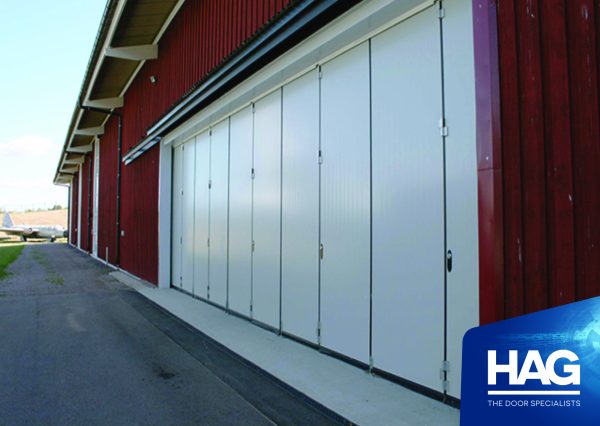
In a remarkable confirmation of engineering resilience, HAG Ltd (the UK’s industrial and specialist door manufacturer) has received news from the British Antarctic Survey that two bi-folding Q-doors installed at King Edward Point, South Georgia Island, are still in use after 22 years, requiring only new bottom seals. The doors were originally deployed to protect critical infrastructure from extreme cold, ferocious winds, and corrosive sea salt — conditions most building systems would not survive.
A remote test of durability
The correspondence came from Paul Cousens, facility engineer at the British Antarctic Survey Station at King Edward Point, South Georgia—one of the most remote and inhospitable places on the planet. In his own words: “We have two of your doors in a boatshed at South Georgia Island. They were installed 22 years ago and are in need of a set of bottom door seals.”
Standing at a latitude nearly equivalent to Cape Horn, the station endures hurricane-force winds, winter extremes, and relentless salt spray. The Q-doors serve as a shield against these elements, offering thermal insulation, resistance to wind loads, and secure protection for the station’s main structure.
When Cousens reports that only the bottom seals need replacing and that the core door systems remain structurally sound, it underscores the durability and long-term return on investment of HAG’s door systems.
Engineering for extremes
HAG’s Q-doors are bi-folding, rigid doors intended for industrial use, especially in environments where space constraints, insulation needs, and resistance to extreme forces are key design parameters. Their deployment at King Edward Point was meant to provide protection from wind speeds of up to 65 knots (or more) and severe salt-laden conditions—not a trivial challenge for any door system.
Traditional rolling shutter doors would likely have failed long ago under such stress. In contrast, the bi-folding design offers strength against lateral pressures, better sealing against ingress, and reduced exposure to wear from repetitive motion or wind-induced vibration.
Beyond the Antarctic outpost, the implications are clear: for industries operating in demanding climates—coastal facilities, offshore platforms, cold storage warehouses, or remote structures—investment in high-specification doors can yield decades of service. The story of these Antarctic doors provides a credible and compelling testimonial.
“Receiving this confirmation from one of the harshest environments in the world is not just gratifying — it is proof of what engineering excellence can achieve,” said Jason Jones, Technical Manager, HAG Ltd. “It speaks to our commitment to durability, performance, and long-term value for clients in even the most extreme settings.”