

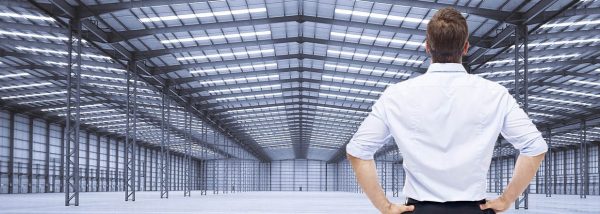
The construction industry can play its part in the battle to address climate change, by looking to the roof. Currently, around 10% of the UK’s carbon dioxide emissions are directly associated with construction*. Increased use of GRP (glass reinforced polyester) industrial rooflights can help reduce a building’s carbon footprint in a multiplicity of ways.
There is no disputing that rooflights of any material reduce the need for, and use of, artificial lighting. They allow natural daylight into a building. The reduction in the need for artificial lighting means they have always played a role in delivering BREEAM-rated buildings. For the first time, the contribution can now be verified in industrial buildings.
Hambleside Danelaw’s Zenon brand of GRP in-plane rooflights are the first of their kind to attain an Environmental Product Declaration (EPD) from the Building Research Establishment (BRE). The Declaration applies to Zenon GRP site-assembled and composite rooflights, and can be used to contribute 1.5 points towards a BREEAM credit under the accreditation’s Materials (Mat 02) category, when used as part of a metal roof.
The Materials category, alongside Energy and Health & Wellbeing, form the three top-scoring BREEAM categories. Historically, rooflights have contributed mainly under BREEAM in the second two categories, for the benefits they bring in optimising natural daylight. But it has been an intangible element, varying in its contribution from scheme to scheme.
For architects and contractors, aspiring to achieve a BREEAM rated project enhances the building’s potential once complete. BREEAM itself maintains that accreditation can add up to 20% on sales and rental premiums: reduced running costs in terms of energy consumption- lighting, heating etc, improved occupier performance from a naturally-lit internal environment, and reduced incidence of ‘sick building syndrome’.
Incorporated at the initial design (Concept RIBA stage 2), the rooflights generate little or no cost by their inclusion and make the BREEAM point accreditation easy to apply. We all know that often designs change as the process progresses. Rooflights are easy to install retrospectively as the build/ procurement continues, and can then recover points that may have been lost elsewhere.
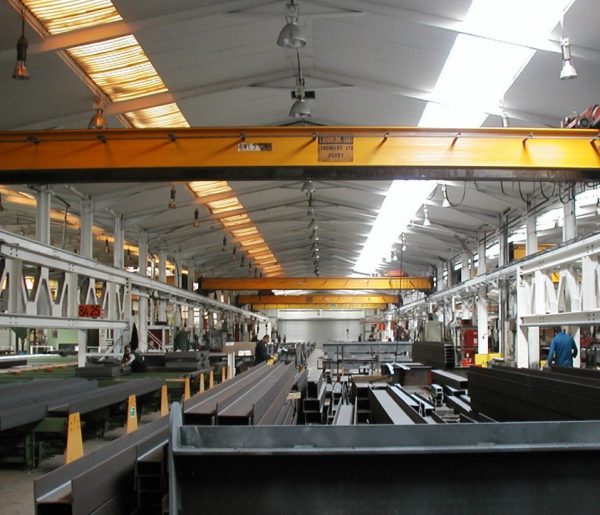
Zenon GRP rooflights make a sustainable contribution above and beyond BREEAM.
The National Association of Rooflight Manufacturers (NARM) says a roof that is 18% rooflights sees the optimum balance between rooflight: metal roof, in terms of energy consumption, and thermal performance. Using Hambleside Danelaw’s on-line performance calculator tool, specifiers can configure their rooflights to contribute towards a U value of 1.3W/m2K or better. The tool enables users to change their specification to achieve their optimum balance of light transmission, thermal insulation, solar gain and embodied carbon.
Zenon GRP rooflights do not emit any chemicals once installed, so are safe to use with grey water systems, and in green roof schemes. At the end of their life they can be broken down into constituent parts and turned into Solid Recovered Fuel (SRF).
Zenon Evolution GRP in particular uses pioneering technology to employ less resin in the manufacturing process, resulting in a lighter weight, high strength sheet with good light transmission. Further, the use of Zenon Evolution as the weather facing sheet creates a rooflight that is up to 40% lower in embodied carbon than conventionally reinforced alternatives offering equivalent strength.
Additionally, the use of Hambleside Danelaw’s pioneering and patented cellulose acetate Insulator core will offer improved U values compared to traditional multiwall polycarbonate, and lower embodied carbon, in a material that is biodegradable at the end of its life.
Therefore, even if BREEAM is not a key objective in the project design, Zenon rooflights can still make a positive contribution towards the building’s green footprint.
*Green Building Council