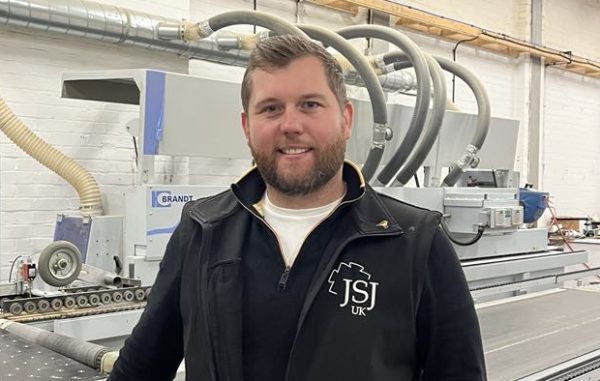

The construction industry continues to talk about a skills shortage, but framing the challenge purely as a numbers issue misses a more fundamental problem. The real gap is not just capacity – it is capability, as Jack Smith, Founder & Managing Director of JSJ UK, explains in this timely article.
Having enough people entering the industry is important, but it does not solve the growing need for highly skilled, adaptable and technically proficient tradespeople who can deliver increasingly complex, bespoke work.
As founder and MD of JSJ UK, and someone who began my own career in the industry through NVQ apprenticeship programmes at Preston College, I’ve seen first-hand what it takes to develop capability in this industry. My training combined workshop learning with on-site experience over three years, giving me exposure to the full lifecycle of joinery projects and a practical understanding that cannot be replicated through short-form training.
That experience has shaped how we approach skills development at JSJ UK today.
Capability is built through time, trust and repetition
One of the most overlooked parts of apprenticeships is behaviour and attitude.
To become a good apprentice, you have to build trust with the people you are learning from. Experienced tradespeople are passing on knowledge that cannot be found in a textbook. In return, apprentices must show initiative, ask questions and demonstrate genuine interest. It has to be a two-way process.
That culture of learning is what develops real capability over time.
The problem with ‘fast-track’ qualifications
A growing concern in the sector is the rise of fast-track training routes that claim to produce fully qualified tradespeople within a matter of months to a year.
While these courses may introduce people to the industry, they risk creating a false impression of what a skilled trade involves.
Joinery has a vast range of areas that people can specialise in, which cannot be condensed into a short training cycle, particularly in bespoke manufacturing and fit-out. It requires years of learning, repetition, problem-solving and exposure to different materials, environments and project demands.
That is why at JSJ UK we work closely with North Lancs Training Group (NLTG), ensuring all of our apprentices are supported through structured programmes that combine workshop experience and on site joinery experience with formal learning.
The reality is simple: you cannot shortcut experience.
Technology is changing the industry – but not replacing craftsmanship
Technology, automation and advanced machinery are reshaping manufacturing and fit-out processes. At JSJ UK, we have embraced modern methods to improve precision and efficiency.
However, in bespoke joinery, technology enhances skill and efficiency – it does not replace it. While AI and automation will continue to transform parts of construction and manufacturing, hands on bespoke craftsmanship will not be replaced. It relies on judgement, experience and on-site problem solving that technology alone cannot replicate.
The ability to interpret drawings, understand materials and deliver a high-quality finish remains central and fundamental. As projects continue to become more complex and unique, the demand for highly skilled craftspeople will only increase.
Building careers, not just filling roles
A strong example of long-term capability development is Kane Maddran. Kane joined JSJ UK as a 17-year-old labourer and has progressed over more than a decade, completing five apprenticeship/training programmes, including a degree. Kane is now fundamental in JSJ UK’s Quantity Surveying and Commercial team.
His journey reflects what is possible when businesses invest in people beyond their initial role, creating genuine career pathways rather than short-term placements.
Recognising long-term investment
At JSJ UK, around 20 per cent of our workforce has come through the apprenticeship route, reflecting our long-term commitment to developing in-house capability. This investment is not about filling immediate gaps – it is about building a pipeline of capability that supports long-term growth and a solid pathway carving the future of JSJ UK.
This approach was recently recognised when we won the Manufacturing Future Talent Award at the Made in the North West Awards.
Rethinking what a skilled workforce means
If construction is serious about closing the skills gap, it needs to move beyond short-term thinking.
Capability takes time. It is built through structured learning, hands-on experience, mentorship and exposure to real-world challenges. It cannot be accelerated to fit workforce demand cycles.
Young people should absolutely be encouraged into construction and joinery. It is a skilled, creative and evolving industry with long-term opportunity and a skillset to be proud. But we must be honest about what it takes to succeed.
The future of construction will not be defined by how quickly we bring people in, but by how effectively we develop them into skilled professionals who can carry the industry forward.