

As the skills gap comes into greater focus across the construction sector, Sam Blacknell, Head of Skills Partnerships at British Gypsum, explores how the future of skilled trades such as plastering can be strengthened through collaboration.
The construction industry has been grappling with the challenges posed by the skills gap for many years, but as pressure mounts to meet ambitious targets – including the need to build 1.5m net new homes – the skills gap is now coming into sharper focus.
According to the Construction Industry Training Board (CITB), the industry will need almost one million new workers over the next six years if it is to meet demand, with plastering being a key trade contributing to those numbers. Today, there are around 40,000 plasterers in the UK, but as a greater number of them get closer to retirement age or choose to leave the industry, that number continues to shrink with fewer new entrants pursuing careers in the trade.
In recent weeks, we’ve seen the Government make significant commitments to support new entrants into construction jobs through dedicated funding for apprenticeships, including £600m to create 60,000 new apprenticeship opportunities. Apprenticeships have long been seen as a solution to the skills gap, but with recent reports suggesting they are now harder to secure than a place at some of the UK’s top universities, barriers to entry remain. At the same time, Office for National Statistics (ONS) figures show that around one million young people are not in education, employment or training, making this investment particularly welcome.
To ensure the most in-demand trades have a bright future, and utilise the talent, skill and ambition of the younger generation, a collaborative effort is required. Together, we can overcome the pressures of an ageing workforce, change perceptions of careers in construction, and increase opportunities for new entrants with clearer and more accessible pathways.
How the skills gap looks today
The skills gap isn’t a new challenge for the construction industry, but its impact continues to be felt across projects of every size – from refurbishment jobs through to large-scale commercial projects and new build developments. On these jobs, labour shortages are putting pressure on timelines, driving competition for skilled workers and creating challenges around achieving consistent quality.
Behind the skills gap, we see several drivers:
- CITB has highlighted the sector’s ageing workforce, noting that by the end of 2017 around 47% of construction workers were over 45 and one in five were over 55, reinforcing the retirement challenge facing the industry.
- While we’re seeing skilled tradespeople – and their decades of expertise – leave the sector, there’s also not enough people coming through to replace them.
- Fewer young people today are seeing the construction sector as an appealing career choice, despite the industry offering strong opportunities for career progression and innovation. Changing these perceptions remains a key challenge if we are to attract more people into skilled trades such as plastering.
This sees the construction sector, including plastering, face an important question: how do we reposition ourselves to be seen as an attractive career for the next generation? While recruitment is one part of the challenge in tackling perceptions, so too are the roles of innovation, skills and training.
Supporting the future of plastering through innovation
Innovation plays a huge role in moving our sector forward, and it’s something manufacturers like us are increasingly focused on in order to enhance product offerings and services for our customers. When it comes to plastering, innovation is also playing a role in the craft itself, with new application methods emerging that help professionals to work more flexibly while retaining the art of their trade.
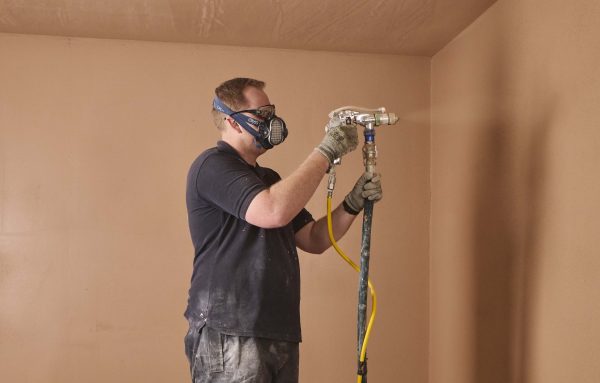
Spray-applied plaster is one example of this, and, in the context of the skills gap, it has the potential to support new entrants and skilled plasterers alike.
The benefits of spray-applied plaster extend far beyond application, tackling some of the key factors that sit behind the huge numbers of professionals leaving the trade, as well as those which put off young people from becoming plasterers.
We know plastering can be a physically demanding job. On projects big and small, plasterers will be handling materials and working quickly to get plaster on the walls before it dries. While this can take its toll day-to-day – a factor which can put young people off entering the trade – it’s also one of the reasons behind some professionals leaving the industry early in their careers.

Spray application eases the physical aspects of plastering, supporting professionals to complete jobs to high standards. The use of spray machines also means new entrants can get involved in projects sooner, often while they’re still training. As apprentices can start spray-applying plaster almost immediately, they are able to become productive on-site quicker, providing employers with a strong incentive to recruit and develop the next generation of plasterers.
British Gypsum’s Thistle MultiFinish is now suitable for spray application, having been tested on machines from four manufacturers so far. Providing plasterers with an alternative method of getting plaster onto walls and ceilings, spraying can speed up jobs while still delivering the same trusted finish and performance professionals strive to deliver.
Building skills for the next generation
While innovations like spray-application can make some aspects of the job more accessible and less strenuous, practical training remains essential in building the skills that underpin future workforces.
Colleges naturally play a key role here, delivering courses that provide the opportunity for young people to combine classroom learning with practical, hands-on training. Recognising the value of this, British Gypsum also offers a site-ready skimming course which is designed to bridge the gap between learning environments and real-world applications. Through this we’re helping new plasterers build confidence as they lay the foundations of their career.
Over a six-week period, the course is delivered through training partners around the country, with skilled plasterers tutoring the next generation. Working in a dedicated training bay, participants learn how to skim ceilings and walls, alongside more challenging tasks like plastering around windows or chimney breasts, where angles require greater skill.
Spray-application techniques are now being added to this course, as well as being introduced into colleges to ensure new plasterers are familiar with the technology from the start of their journeys in the trade.
A joined-up approach to navigating the skills challenge
The construction industry has been tackling the skills challenge for years and, while it’s a problem that is likely to persist, there are actions that we can take to strengthen the industry and ensure a skilled workforce for the future.
Collaboration is at the heart of the solution. Government funding plays an essential part in making apprenticeship opportunities more accessible, and learning providers and manufacturers can support in ensuring the skills being learned today are practical for where our industry is heading.
For plastering, that means continuing to prioritise traditional skills and techniques, which are an essential part of the trade. Alongside this, introducing new innovations can make the industry more accessible, while allowing skills and capabilities to evolve as the demands placed on essential trades grow.
National ambitions around housebuilding and infrastructure in the coming years reinforce the need for essential trades right across the construction industry. To make sure that’s the case, a collaborative approach – between government, learning providers and manufacturers – is the key to strengthening the industry for the future, making it accessible to new entrants while supporting professionals at every stage of their careers.
Find out more about British Gypsum and how we are supporting the industry through innovation and training, here: www.british-gypsum.com/spraying-thistle-plasters.