

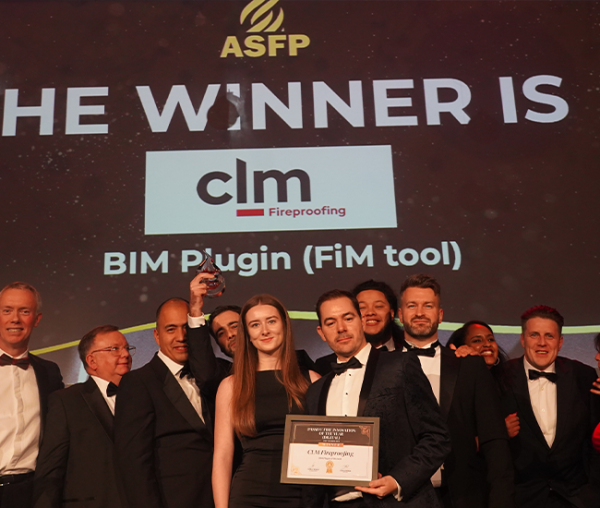
Since Construction Industry News last caught up with CLM Fireproofing 12 months ago, the company has further strengthened its position within the passive fire protection sector, evolving its offering in response to tighter regulation, increased Gateway scrutiny and a growing industry focus on design‑stage compliance.
Building on a long heritage in specialist fireproofing, the business has invested heavily in digital capability, consultancy expertise and people, allowing it to support clients much earlier in the project lifecycle.
A central development during the year has been the continued rollout and growing adoption of NEXUS, CLM’s proprietary Revit/BIM plugin. Designed to address long‑standing challenges around passive fire protection coordination and compliance, NEXUS introduces digital intelligence into the design process, helping project teams identify non‑compliant conditions and define clear routes to compliance before designs are fixed.
“Too often, passive fire protection is still treated as a late-stage consideration; when changes are costly and disruptive to programme.” explains Mark Taylor, Executive Director. “What we’re seeing now, particularly since the Building Safety Act came into force, is a clear shift. Clients want certainty much earlier, and NEXUS allows us to support that by embedding compliance thinking directly into the design stage.”
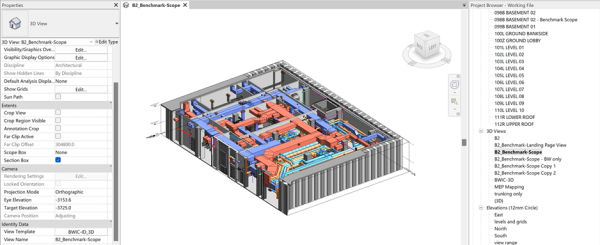
The plugin interrogates BIM models to identify penetrations, openings, clashes and spatial constraints, highlighting issues that could otherwise lead to redesign, trade conflict or non-conformance during construction. One of its key strengths is the ability to link compliant openings directly to manufacturer-tested firestopping systems, rather than relying on generic intent details. “The link to manufacturer-tested details is critical,” Mark adds. “It moves the conversation away from aspiration and towards buildable compliance. From a Gateway perspective, it gives design teams far greater confidence that what is being proposed can actually be delivered on site.”
NEXUS is supported by CLM’s in‑house BIM technicians and technical specialists, ensuring that digital outputs are validated through real‑world installation experience. Over the past year, this integrated approach has gained increasing traction among architects, developers, consultants and Tier 1 contractors, reflecting a wider market demand for earlier specialist engagement.
That appetite has strongly influenced CLM’s development strategy. Over the last 12 months, the business has continued to invest in specialist people and capability that allow it to engage meaningfully during early RIBA stages. By working alongside project teams before designs are frozen, the company is helping clients address passive fire protection strategy, coordination and compliance, while change is still achievable and cost‑effective.
“Early engagement doesn’t just reduce risk — it makes the whole process more predictable. By bringing passive fire into the design stage, we help teams close scope gaps, cut late-stage change and produce clearer, more coordinated information. Linking openings to manufacturer-tested details — and capturing that in an evidence-ready handover pack — saves time and money and gives clients far greater confidence in what can actually be delivered on site.”
This approach has proven particularly valuable across complex sectors over the past year.
The life sciences sector has also emerged as a strong growth area. Laboratories, research facilities and innovation campuses are typically services‑heavy and technically complex, with large volumes of penetrations through fire‑rated elements. CLM’s blend of consultancy input and installation knowledge has helped clients avoid repeated design changes and significant cost escalation during construction.
Similarly, healthcare projects, including those delivered through major UK government hospital frameworks, continue to drive demand for specialist firestopping expertise. Hospitals present unique challenges around compartmentation, phased delivery, live environments and long‑term asset performance, all against a backdrop of heightened compliance expectations.
Alongside consultancy and digital innovation, CLM has maintained a strong focus on operational excellence. Continued investment in training, competence and technical knowledge has ensured installation teams are equipped to meet increasingly demanding regulatory standards. This reflects a broader industry shift towards recognising firestopping as a specialist discipline requiring evidence, traceability and coordination, not simply site installation.
CLM Fireproofing was also recognised in the FT1000: Europe’s Fastest Growing Companies 2026. Commenting on the achievement, Jamie Rogers, Managing Director, said: “This recognition is a strong endorsement of CLM’s strategic direction, the commitment of our team, and the trust our clients and partners continue to place in us. It reflects the progress we have made as a business and reinforces our commitment to sustainable growth, operational excellence, and continued innovation, including through solutions such as our Nexus platform.”
Looking ahead, CLM’s focus remains firmly on compliance, delivery and people. By continuing to promote safety‑by‑design, investing in digital tools that strengthen Golden Thread records, and developing the skills and behaviours needed for long‑term success, the company is positioning itself as a trusted specialist partner in an increasingly regulated and technically demanding construction environment.