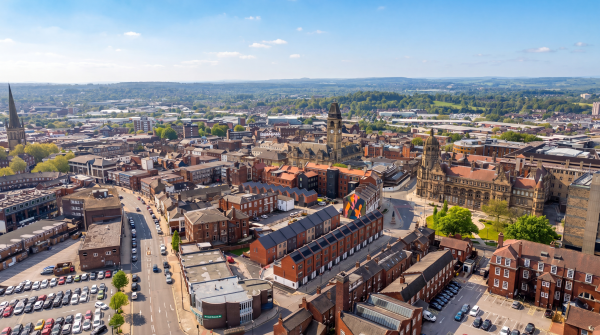
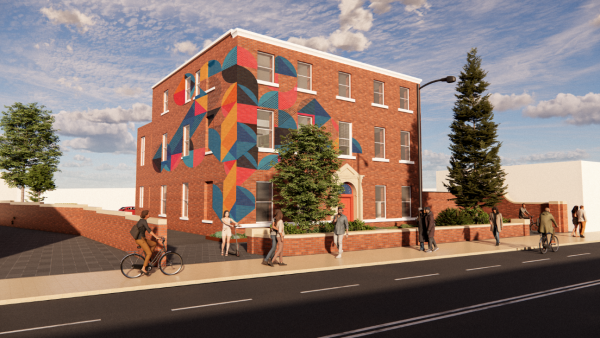
Plans have been approved to transform the former Coroner’s Court on Northgate into a new creative hub, marking the latest step in Rushbond’s regeneration of Wakefield’s Civic Quarter.
The project is being led by Yorkshire-based property investment and heritage specialist Rushbond in partnership with Wakefield Council. It forms part of a wider programme to restore historic buildings and introduce new homes, creative workspaces and cultural activity back into this part of the city centre.
The Grade II listed building, which will be known as 71 Northgate, is set to be converted into a series of flexible studio spaces for makers, artists and small businesses.
Located just 100 metres from Wakefield’s historic former Crown Court, soon to be known as the Court House, the two buildings will together play a key role in the emerging Civic Quarter. The area is being reshaped as historic civic buildings are restored and brought back into everyday use, alongside new homes, studios and creative spaces.
Harry Braid, Development Surveyor at Rushbond, said the Court House is set to become a vibrant destination within the city. He described it as a place where designers, local radio hosts and independent businesses will come together in studio spaces, while families and visitors will be able to enjoy theatre, music, markets and food and drink. He added that bringing new life to this historic building, alongside 71 Northgate, represents an exciting opportunity.
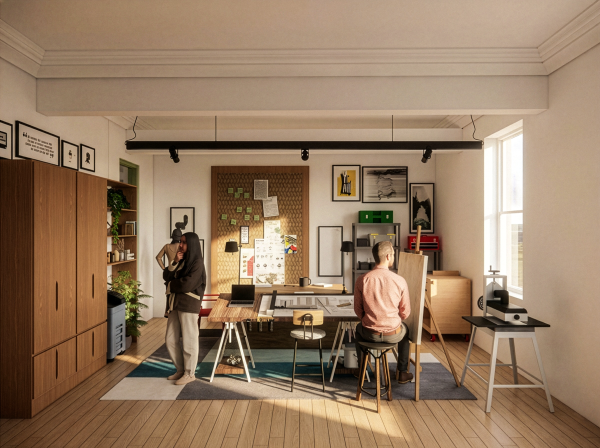
Within the wider vision for the Civic Quarter, 71 Northgate will serve as a complementary space to the Court House. It will provide smaller-scale studios and enterprise space, supporting the larger cultural and events uses planned nearby.
Restoration work on the Grade II listed former Crown Court is continuing, with specialist teams working carefully to preserve its historic character. Recent work has focused on removing later additions to reveal and retain original architectural features wherever possible, reflecting the sensitive and detailed approach required for a building of this significance.
Once complete, the Court House will reopen to the public for the first time in more than 30 years. It is intended to become a place where people can gather, work and spend time as part of everyday city life, while also acting as a modern interpretation of a traditional village hall for new and existing residents.
Jonathan Maud, Founder and Chairman of Rushbond, said Wakefield’s historic buildings deserve to be restored with care, patience and high standards of design. He described the Court House and 71 Northgate as once-in-a-generation opportunities to find sustainable new uses for buildings that have long played an important role in the city. He added that the aim is to create something best in class in terms of build quality, design and community use, and that the ambition behind these projects reflects what Wakefield deserves.
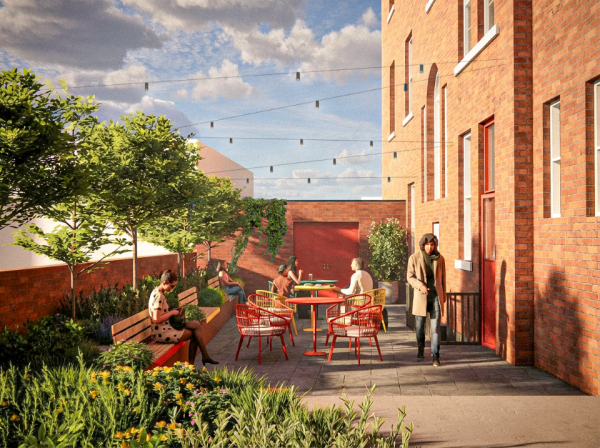
Elsewhere in the Civic Quarter, wider regeneration activity is already becoming visible. The first phase of 63 homes at the Wood Street Collection was completed last year, bringing new residential life into the city centre through a mix of restored historic buildings and contemporary new homes.
The scheme includes apartments within the restored former police station, townhouses at Gills Yard and the transformation of Wood House, once the police superintendent’s residence, into a four-storey townhouse.
Six months after completion, the former Wood Street Police Station is now almost 80 percent let, with only seven apartments remaining available to rent. Homes for sale at Gills Mews have also recently been released, including three-storey townhouses on Rishworth Street.