


As 2025 draws to an end and thoughts turn to the year ahead, in this series of articles we’ve sourced the viewpoint of various leading industry figures. This time we’ve sought the input of individuals from Whitecode Consulting, Wynne Construction, Buckles Law, Collins Rolston Architects, and Instantor, to gather their opinions on how the last 12 months have been for construction and to get their predictions for 2026.

Alex Hill, Managing Director of Whitecode Consulting:
“It’s been a frustrating year for the construction industry. While well-meaning, the Building Safety Regulator (BSR) has often delayed project completions by taking longer than eight weeks to decide on an application. We’ve also had a few technical disagreements with what they’ve been asked to do.
“The BSR was brought in to help, but it has often had the opposite effect – with some clients changing their designs to reduce the number of floors to avoid the BSR entirely. It’s putting off some investors, and companies across the built environment are going out of business because delays mean they’re not being paid.
“Looking ahead to 2026, my hope is the BSR can clear the backlog quickly and efficiently.
“Planning can often be cumbersome but it should be a clear process and not about people. Plus, investors aren’t interested if projects have unknown timelines. The government needs to sort out the planning process so that it’s more definitive.
“I’d also suggest penalties for Local Authorities that block the planning system and the holding to account of those government civil servants not delivering.
The government must improve its funding initiatives and its messaging. For instance, schools are told they should not be installing gas boilers but can’t afford the alternatives. It’s also vital the government stops delaying regulations, such as the Future Homes Standard. It can be very confusing for business owners trying to meet deadlines to then see them postponed again.
“Ultimately, does the government want to decarbonise or save money?”
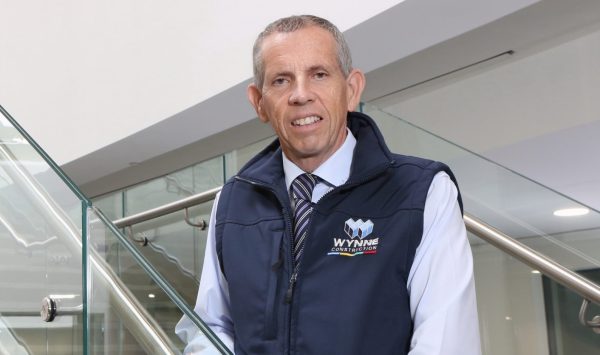
Chris Wynn, Managing Director of Wynne Construction:
“We’ve enjoyed another strong year, and with a healthy order book already secured for 2026, we’re looking ahead with real optimism. Our growth has been helped by diversifying and expanding our regional presence, particularly in South Wales.
“Opening a Cardiff office in early 2026 is a natural step for us, especially now that South Wales represents approximately 60 per cent of our turnover.
“Alongside our long track record in education – from schools and colleges to university buildings – we’ve also moved further into social housing and healthcare, both public and private. Projects like Sunnyside Wellness Village, a 59 homes and medical centre scheme, show the strength of that approach.
“Although we’re excited about the pipeline of work on the horizon, I feel there are a number of concerns holding the entire sector back as we head into 2026.
While our profits have remained steady, turnover dipped slightly this year, largely because planning delays and decision-making bottlenecks continue to slow schemes. Procurement is another major burden. It’s the industry’s single biggest operating cost, with the resources needed to tender rising every year, becoming increasingly unwieldy and onerous.
“Looking ahead, I expect planning and procurement challenges to intensify unless the system is reviewed in a meaningful, practical way. The industry needs to be consulted properly, and what’s happening on the ground must shape how we move forward.
“The next 12 months are full of positivity from our side, but if planning and procurement hurdles are tackled in the correct manner, confidence across the entire sector will skyrocket.”

James Coppinger, partner and Head of Construction & Engineering at Buckles Law:
“The UK construction sector in 2025 experienced a year of steady but uneven progress, shaped by shifting economic conditions, the growing influence of sustainability requirements, and also case law emerging from the Building Safety Act.
“At Buckles Law we have seen many firms navigate persistent cost pressures, with materials and labour expenses remaining higher than pre-pandemic levels and the professional indemnity insurance market remaining cautious. Despite these challenges, the industry saw notable recovery in commercial refurbishment and public-sector infrastructure, particularly in transport upgrades and energy-efficient building programmes.
“We have experienced housing delivery continuing to lag behind long-term targets, together with delays to Building Safety Regulator approvals for HRBs, yet there was renewed momentum in modular construction and off-site manufacturing as developers sought faster, more predictable build cycles.
“A defining feature of 2025 was the sector’s accelerated adoption of digital tools. Building Information Modelling, AI-driven project planning, and sensor-based site monitoring became more mainstream, helping companies improve productivity and reduce delays. Environmental performance also moved to the forefront, as contractors adapted to stricter carbon-reduction frameworks and clients increasingly prioritised low-emission construction methods.
“Looking ahead to 2026, there is cautious optimism. Anticipated easing of inflationary pressures may provide a more stable cost environment, giving developers greater confidence to progress stalled schemes. Continued government focus on housing and green infrastructure is expected to unlock opportunities across both urban regeneration and renewable-energy construction. The industry also hopes for greater efficiency in building regulations approvals alongside further innovation in materials, particularly low-carbon concrete alternatives and scalable timber solutions.
“While challenges remain—skills shortages, planning delays, and the need for consistent policy support—Buckles Law’s outlook for 2026 suggests gradual strengthening. With sustained investment and growing environmental ambition, the sector is positioned for more resilient and forward-looking growth.”

Mark Collins, Architect at Collins Rolston:
“2025 has been a year of growth, delivery and impact for Collins Rolston. Across Northern Ireland, Ireland and the UK, we’ve expanded our team and delivered projects that combine design excellence with sustainability and social value. Highlights include the Grosvenor Road and Sandy Row Public Realm Project in Belfast, essential hospital refurbishments in Belfast and Derry/L’Derry, and the Hosford Community Homes Inclusion Hub on Newtownards Road. These projects reflect our commitment to high-quality design, urban regeneration and future-proofed, low-carbon buildings.
“Our framework appointments, including Translink, Health Trusts, Arbour Housing, multiple city councils and education authorities, have enabled us to support diverse sectors from healthcare and education to social regeneration. Technology remains central: Virtual Reality and BIM allow clients to fully engage with designs before construction begins, enhancing collaboration and reducing revisions.
“Sustainability and social value are embedded in every project. We champion PASSIVEHAUS and BREEAM standards, repurpose existing structures for contemporary use, mentor emerging architects and provide pro bono support to community initiatives. In 2025, our team was also recognised at the Belfast Telegraph Property Awards, with the Space Antrim Hub winning in the Mixed-Use Development category.
“Looking to 2026, I’m confident in the opportunities ahead. Funding pressures and infrastructure constraints remain, but these challenges create pathways for innovation and collaboration. Our focus will remain on delivering technically excellent, socially valuable projects, supporting clients, communities and talent alike. At Collins Rolston, we aim not just to build structures, but to strengthen communities, inspire teams and create sustainable, forward-looking spaces that make a meaningful difference.”

Neil Gaffney, Managing Director of Instantor:
“2025 has been a year defined by both pressure and progress across the UK construction sector. It’s no secret that there is an ongoing skills shortage within the construction industry, including the plumbing and heating sector. According to the UK Trade Skills Index 2023, 73,700 new plumbers are needed by 2032. Additionally, SNIPEF’s State of Trade Report for Q2 2025 confirmed that across Scotland and Northern Ireland, 69 per cent of firms reported low availability of skilled plumbing and heating engineers
“Despite these pressures, 2025 has also brought significant progress through innovations designed to help the industry work smarter and more efficiently. At Instantor, we remain focused on developing solutions that streamline installation and reduce callbacks, enabling the existing workforce to deliver more projects in less time.
“An example of this is our Instantor Press System which includes user-friendly press fittings that feature brass bodies and stainless steel sleeves. The fittings also feature three inspection windows to ensure the pipe is properly inserted before pressing, helping to avoid costly callbacks. Instantor Press also offers high quality Pex-al-Pex multi layer pipe with a butt-welded aluminium core for enhanced durability even when pipe is bent when used in applications such as underfloor heating.
“Looking ahead to 2026, we believe the construction industry will continue to depend on product innovation and training programmes that boost efficiency. Investment in apprenticeships and upskilling will be vital. Through initiatives such as our Mobile Training Academy, Instantor is committed to helping strengthen the talent pipeline and support better installation standards.”