

As the UK faced one of the wettest starts to the year and the hottest ever May days were recorded on May 25 and 26, the Met Office warns the impacts of climate change are increasingly evident. While intense visible weather passes quickly, the ground beneath critical infrastructure can be weakened by changing conditions. With more extreme climate patterns expected in the next decade, Jon Chevin, commercial and infrastructure director at ground engineering specialist Geobear, discusses how the construction industry can prepare for potential subsidence surges.
Met Office assessments show that the UK is becoming wetter, with the 2011-2020 decade averaging nine per cent more rainfall than the 1961-1990 baseline period. Alongside rain, temperatures have also increased, with 2025 named as the hottest summer on record. The impact of climate change is likely to bring more extreme weather events, pushing the UK’s seasons out of balance.
The hidden threat beneath us
Climate change directly affects livelihoods, through events such as coastal flooding and crop failures. While many people rightly prepare for these impacts, some hidden threats like subsidence can go unnoticed.
Structural movement can be worsened by prolonged rainfall, saturating clay-rich soils and causing heave. In contrast, warmer temperatures dry out soils and cause tree soils to aggressively seek additional moisture, resulting in soil contraction and shrinking as moisture evaporates. This shrink-swell cycle weakens ground soils’ structure and threatens infrastructure foundations above.
Continued shrink-swell cycles can increase subsidence cases. The last major subsidence surge year was in 2022, where record-breaking temperatures rapidly dried soils, resulting in widespread ground movement particularly in East Anglia, London, and the south east, where clay-rich soils are the dominant geology.
While no two years are the same, weather patterns so far in 2026 have raised concerns. Following the wettest start to the year, a prolonged hot, dry period could create the conditions for ground movement. The challenge for infrastructure owners is to anticipate these events and prepare their response.
Rising concerns for infrastructure assets
Infrastructure is vulnerable to subsidence surges, particularly transport networks that support daily livelihoods and operations across the country. Ground settlement can weaken track foundations, embankments, and tunnels. Even minor settlement can affect track stability, requiring immediate attention.
While essential, maintenance can cause lengthy disruption. During subsidence surge events, multiple assets may need simultaneous intervention, placing additional pressure on remediation teams and infrastructure operators.
Subsidence in railways is traditionally addressed with ground engineering techniques such as ballast replacement, which replaces defective material. These techniques require excavation by heavy plant and large on-site teams, resulting in lengthy railway closures during works.
Conventional methods can be challenging to implement quickly as long-term scheduled railway closures must be planned across the affected area.
Pioneering ground improvement techniques
With subsidence more likely over the next decade, downtime from maintenance will cause revenue losses for infrastructure asset owners, highlighting the need for quicker, less disruptive solutions to ground engineering concerns.
Tackling the potential rise in subsidence events begins with monitoring ground movement, intervening when minor issues arise before they develop into major infrastructure problems. Part of the calculation about proactive ground improvement of early-stage issues is the associated disruption, driving interest in minimally invasive techniques.
Remediation using geopolymer ground improvement solutions is an increasingly popular method to address track movement within railways. A resin is injected into the affected ground, expanding to relevel tracks, fill underground voids and improving foundations.
The ability to improve ground beneath foundations without extensive excavation makes a geopolymer approach particularly valuable in live rail environments, where access may be limited and maintaining operations is critical.
Ground improvement and waterproofing at Blackheath Tunnel
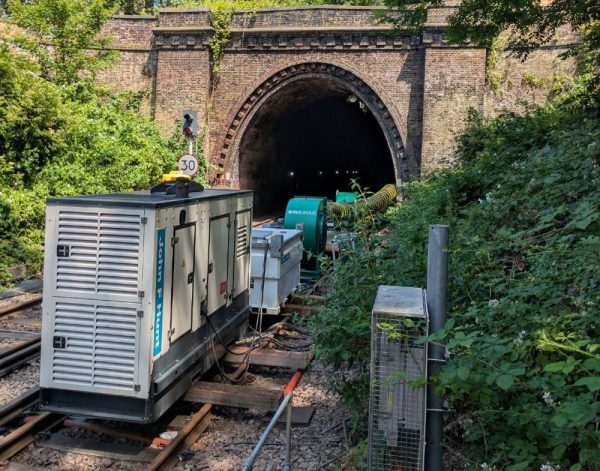
Blackheath Tunnel is a historic Victorian tunnel built in 1849 and forms a crucial link between Kent and central London. Over its lifetime, groundwater has infiltrated surrounding soils, affecting the tunnel’s structure by weakening brick lining and track stability.
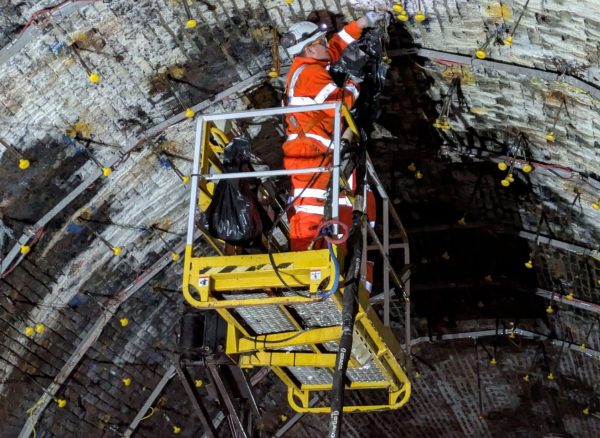
To strengthen and waterproof the tunnel, Network Rail engaged Geobear to complete minimally invasive geopolymer injections. Over 1,000 small diameter holes were drilled to inject tonnes of geopolymer grout into the surrounding sand and gravel pockets.
The expanding geopolymer compressed loose ground and strengthened surrounding soils, improving track quality and reducing water ingress, while avoiding large-scale disruption to train schedules. Over ten weeks, Geobear came together with specialist teams to work across the projects.
Preparing for the next surge
As weather patterns become unpredictable, the asset managers must move beyond reacting to subsidence after damage has occurred. Preventive monitoring of vulnerable assets and intervening early will become increasingly important in reducing disruption and ensuring infrastructure performance. Geobear works with these asset managers to develop ground improvement preventive maintenance plans.
Geobear’s approach provides infrastructure owners with a solution for ground movement. Adopting faster, less disruptive techniques will be key to preparing critical infrastructure for future subsidence surges.
To learn more about how geopolymers can protect key infrastructure, read about Geobear’s void filling project at Shugborough Tunnel.