

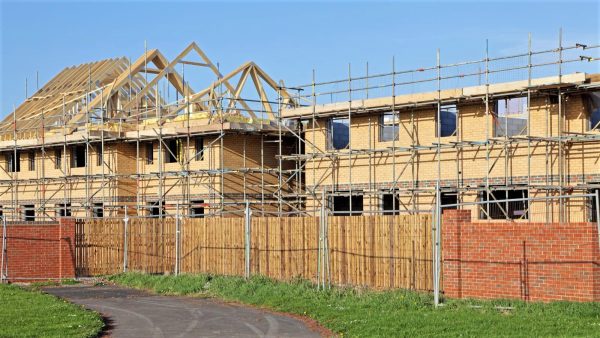
Residential construction activity strengthened in September, with growth recorded at both planning approval and contract award stages, driven by major housing developments across the North-West, North-East and London. Data from Barbour ABI shows residential planning approvals increased by 22% during the month to reach £4.3bn.
A total of 85 residential projects valued at more than £10m received approval in September. The largest was Crown Street Phase 3 in Manchester, a £570m development that will deliver 1,746 apartments. The second-largest residential approval was the £234m Lighthouse development on Great Jackson Street.
Activity also increased at the contract award stage, with housing contract values rising by 34% to £1.7bn. There were 44 residential projects worth more than £10m awarded during the month, up from 29 in August.
The largest residential contract award was the £141m Stainton Vale Farm development in the North East, which will provide 587 homes. This was followed by the £100m redevelopment of Lea Bridge Gas Works in London.
Barbour ABI said the strong performance at both approval and contract award stages suggests continued underlying demand within the housing market, despite ongoing affordability and financing challenges.
The organisation also highlighted the pace at which several major projects progressed through the construction pipeline during September.
“The Agratas Gigafactory and Point of Ayr CO2 Compression Station both appeared in approvals and contract awards during the month, showing how quickly strategically significant industrial and energy schemes can move once consent is secured.
“Energy also features strongly throughout the pipeline, from battery storage and solar applications through to major approvals like Beacon Fen Energy Park,” said Ed Griffiths, head of business and analytics at Barbour ABI.
Across the wider construction sector, contract awards increased by 21% in September to £6.2bn, bringing activity broadly back in line with the 2026 average. Planning approvals remained robust at £9.8bn, while applications totalled £3.8bn, reflecting a more limited flow of major projects entering the pipeline.
The figures indicate a market supported by a healthy volume of approved work and a recovery in contract awards, led by renewed residential activity. However, lower application values suggest a more cautious outlook for project starts further ahead.